Canada has a strong democracy yet there are major flaws in our system. In his book, Teaching About Hegemony (2011), Paul Orlowski explains a unique unit that he created to teach democracy to his students. What makes his unit different? Orlowski taught the flaws in our system to his students: "low voter turnout, voter apathy, uninformed voters, media spin, announced poll results during election campaigns, the Prime Minister's notwithstanding clause, no-paper voting machines, and the first-past-the-post voting system" (p. 165). As you might expect, the unit resulted in an increase to the student's political consciousness. One student, incensed by an elected official crossing the floor for a cabinet position under Harper's Conservatives, wrote and delivered a speach at a political rally protesting the MP's actions. Imagine the possibilities of this unit plan with your students!
Orlowski, P. (2011). Teaching about hegemony. Explorations of Educational Purpose 17, DOI 10.1007/978-94-007-1418-2_8, Springer Science+Business Media B.V. 2011.
WHAT KIND OF CITIZEN?
When we teach democracy and citizenship to our students, we must keep in mind what kind of citizen we want our student's to be. The above example shows that high school teaching a specific kind of citizenship to his students. As Kahne and Westheimer explained in "What kind of citizen? The politics of educating for democracy" (2004) there are three types of citizen. The following points are adapted from their article (p. 240).
Personally Responsible Citizen
Description
- Acts responsibly in his/her community
- Works and pays taxes
- Obeys laws
- Recycles, gives blood
- Volunteers to lend a hand in times of crisis
Sample Action
- Contributes food to a food drive
Core Assumptions
- To solve social problems and improve society, citizens must have good character; they must be honest, responsible, and law-abiding members of the community.
Participatory Citizen
Description
- Active member of community organizations and/or improvement efforts
- Organizes community efforts to care for those in need, promote economic development, or clean up environment
- Knows how government agencies work
- Knows strategies for accomplishing collective tasks
Sample Action
- Helps to organize a food drive
Core Assumptions
- To solve social problems and improve society, citizens must actively participate and take leadership positions within established systems and community structures.
Justice-Oriented Citizen
Description
- Critically asses social, political, and economic structures to see beyond surface causes
- Seeks out and addresses area of injustice
- Knows about democratic social movements and how to effect systemic change
Sample action
- Explores why people are hungry and acts to solve root causes
Core Assumptions
- To solve social problems and improve society, citizens must question, debate, and change established systems and structures that reproduce patterns of injustice over time.
It is important to note that Kahne and Westheimer's citizens are not necessarily arranged in as a hierarchical ladder with the personally responsible citizen as the bottom rung. Furthermore, one can be a justice-oriented citizen who is not a personally responsible or a participatory citizen.
It is important to note that the authors are not encouraging political indoctrination. Rather their article explores how two different schools teach for citizenship. As you may have guessed, the majority of schools only teach students how to be personally responsible citizens. The teachers were directly responsible for the type of citizenship education their student's received. In their conclusions, Kahne and Westheimer suggested "that it is not enough to argue that democratic values are as important as tradtional academic priorites. We must also ask what kind of democratic values. What political ideological interests are embedded in or easily attached to varied conceptions of citizenship?" (p. 263).
When it comes to democracy in the classroom, I believe this article, particularly, the chart will influence how we decide to teach citizenship to our students.
Kahne, J. Westheimer, J. (2004). What kind of citizen? the politics of educating for democracy. American Educational Research Journal 41:2, 237-269.
The History of Democracy in Canada
Teaching the Achievement of Responsible Government as the Work of Engaged Citizens
Though Canada was guaranteed some form of democracy by nature of being a British colony, the power of the elected assembly was often negated by the two to one majority held in parliament by the Queen's Governor-General and his appointed Senate. The history of the pre-confederation period often culminates in the achievement of a government whose actions are accountable to the elected assembly instead of those with the interests of the King or of the elite in mind: Responsible Government.While it is recognized that responsible government was still only responsible to land-owning males of European descent (the only citizens eligible to vote), it is recommended that the achievement of responsible government be taught in History 30 with connections being made to the avenues of engaged citizenry which are open to students, namely the right to vote, the right to have one's voice heard, and the act of violent protest (though the last of these has clear consequences!).
The achievement of Responsible Government, like other political and social changes, was the product of engaged citizens taking action, and should be presented as so. One option for doing so is through character sketches. Students could research the major characters in the story of the achievement of responsible government with special regard for how these individuals used the rights of engaged citizens.
William Lyon Mackenzie: The Right to Vote and the Right to Run for Political Office
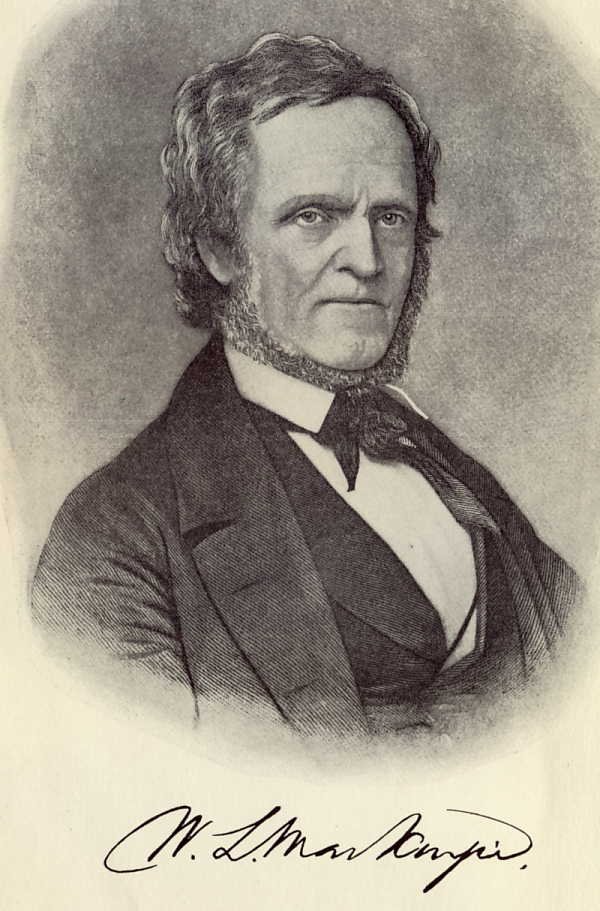
William Lyon Mackenzie (1795-1861) was a political radical who sought to represent faithfully the Upper Canadians who had elected him by opposing the hegemony of the Governor-General and the appointed Upper House. He was outspoken in his frustration over the government's lack of regard for the voice of the common people, and he expressed his discontent in his successful newspaper The Colonial Advocate.
In 1831, Mackenzie published a statement that was considered slander, and was expelled from the elected assembly. Nonetheless, he was re-elected by the people, who obviously felt that he had represented their sentiments toward the ruling elite. Once again he was expelled, only to be elected again and again in a pattern that was repeated several times.
Mackenzie's example demonstrates the importance of the right to vote for engaged citizens. Even if the elected representative will have very limited power in the day-to-day activities of government, as was the case with Mackenzie, the very act of electing a representative can be an expression of the desire for political change. It is the sort of protest that a government cannot ignore.
Possible connections: Link to the voters of Saanich-Gulf Islands riding in BC, who persistently voted for the Green party.
Ask: Why do these people vote for Elizabeth May if she cannot have any real power in government?
Joseph Howe: The Right to Have Your Voice Heard

Joseph Howe (1804-1873), a Nova Scotian politician, lived a life in many ways parallel to Mackenzie King's. A radical and and a newspaper publisher, he was arrested in 1835 for slander (libel) against the Halifax government, accusing them of having "taken from the pockets of the people, in over exactions, fines, etc., etc., a sum that would exceed in gross amount of 30,000 pounds." He was brought before the courts in a high profile case, and though he was clearly guilty, the jury acquitted him of his crime, in blatant protest against a law which prohibited publishing examples of their government's failures.
It took until 1843 for the British Parliament to pass a law permitting the publishing of slander if its content was true.
The people had fought for their voice to be heard. Joseph Howe had spoken out against the government despite a law prohibiting his action, and the people had defended him in court by acquitting him of his crime. The voice of the people can be truly powerful!
Possible connections: Note the constant examples of voices critical of the government today: protest movements, satirical television and radio, etc. Bring up current examples.
Ask: Should the right to criticize government ever be limited? What could be the pros and cons of such limitations?
Louis-Joseph Papineau: Violent Resistance
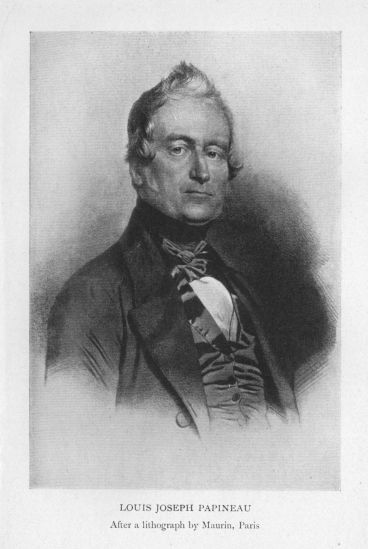
Louis-Joseph Papineau (1793-1860) also believed that the non-elected government failed to represent the interests of the people. After negotiations in the House of Assembly stalled and Papineau's Parti-Canadien finally refused to pass any new legislation, Papineau attempted to make his requests directly to the British. When the British Parliament too refused his requests, instead sending troops in response to his challenge to British authority, Papineau and many others became convinced that a violent revolution was the only option for the people of Upper and Lower Canada. The situation was exacerbated in Papineau's colony, the precursor to today's Quebec, by a language divide between the French-speaking common people and the English-speaking elites who dominated Lower Canadian government. Rebellions led by William Lyon Mackenzie in Upper Canada (1837) and by Papineau in Lower Canada (1838) were quickly put down, and the leaders fled to the United States. However, the indirect result of their rebellion was the British reassessment of the structure of government in the British North American colonies, and the subsequent establishment of Responsible Government in these territories.
Possible Connections: Link to the Toronto G8 protests in 2010.
Ask: Is violence ever a justified action for engaged citizens?
Why do we not usually talk about the violent moments in Canadian democracy?

No comments:
Post a Comment